Heritage triplex renovation in Old Montreal — what changes, what can't
Renovating a heritage triplex in Old Montreal is half archaeology, half negotiation with the Ville-Marie heritage office. Here's what you can change, what's locked, and the price of finding out the hard way.
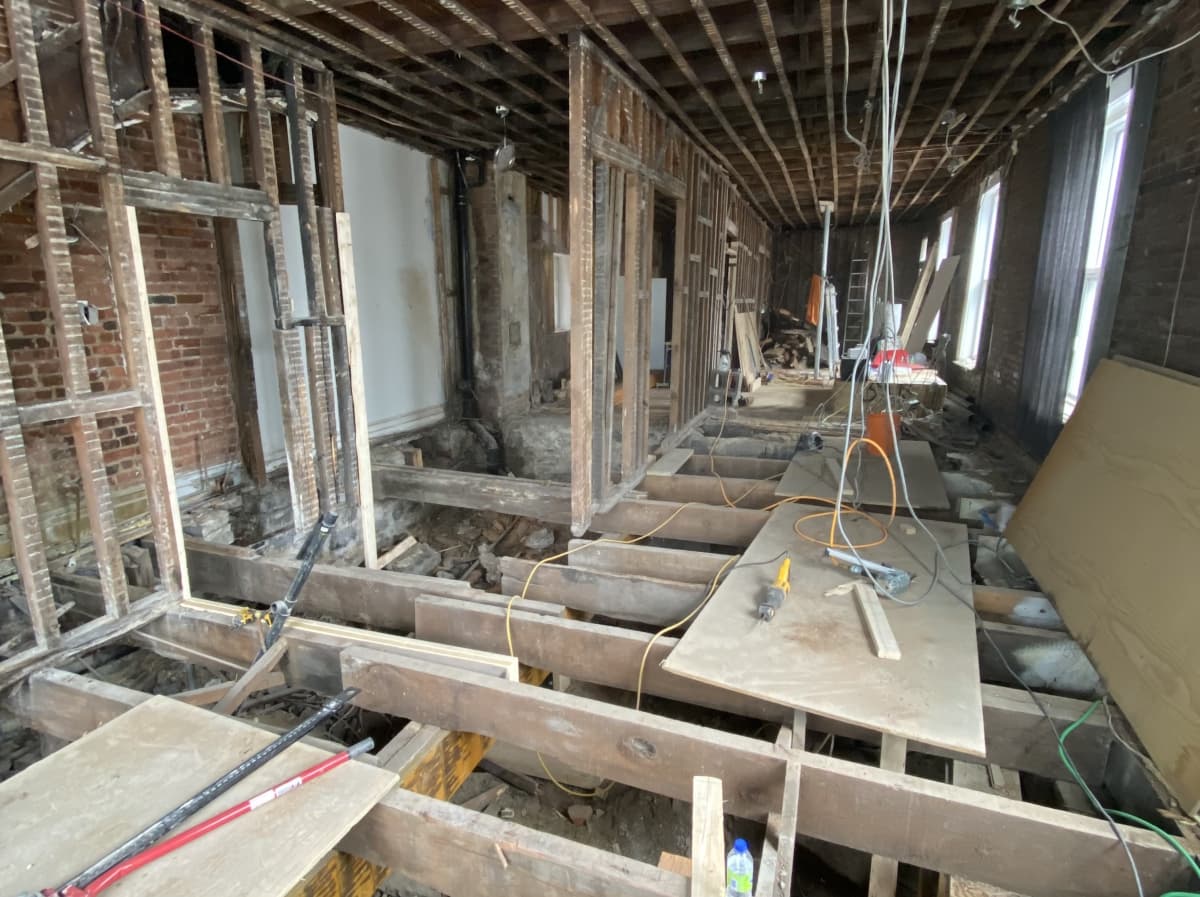
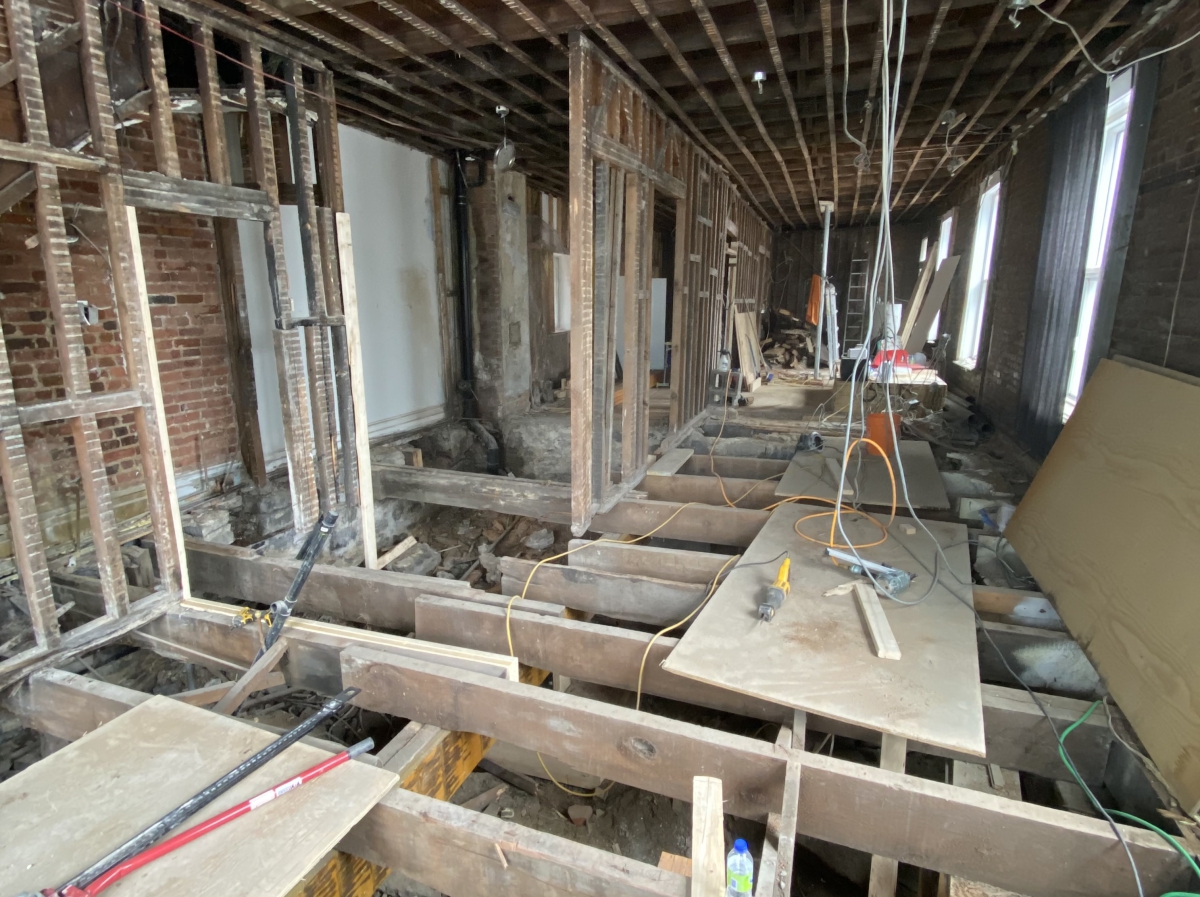
The first morning of demolition on our Saint-Paul Street triplex, we found a hand-pegged 8x10 oak beam where the structural drawings showed a 2x10. It had been holding up the second floor since 1872. We stopped work, called the Ville-Marie heritage officer, and lost a week getting written permission to leave the beam exposed in the final design instead of boxing it back in. That delay cost the project two weeks and roughly $11,000 in re-sequenced trades. It was also the best decision we made on the whole job — the beam ended up the single most photographed element of the finished apartment. Heritage Old Montreal is like that. It will punish you for assumptions and reward you for slowing down.
What "heritage" actually means in Old Montreal
Old Montreal — the area south of Saint-Antoine, west of Saint-Hubert, east of McGill, north of de la Commune — falls under the arrondissement historique de Montréal, a Quebec provincial classification. On top of the provincial layer, the borough of Ville-Marie runs its own heritage review process. In practice, this means three offices may need to sign off before a hammer swings:
- Ville-Marie permits — the regular building permit office
- Ville-Marie heritage officer — for any work visible from a public street
- Ministère de la Culture et des Communications — for changes to provincially classified buildings (a small subset, but the rules are non-negotiable)
For most owner-occupied triplexes the third one doesn't apply, but the first two always do.
What you can change
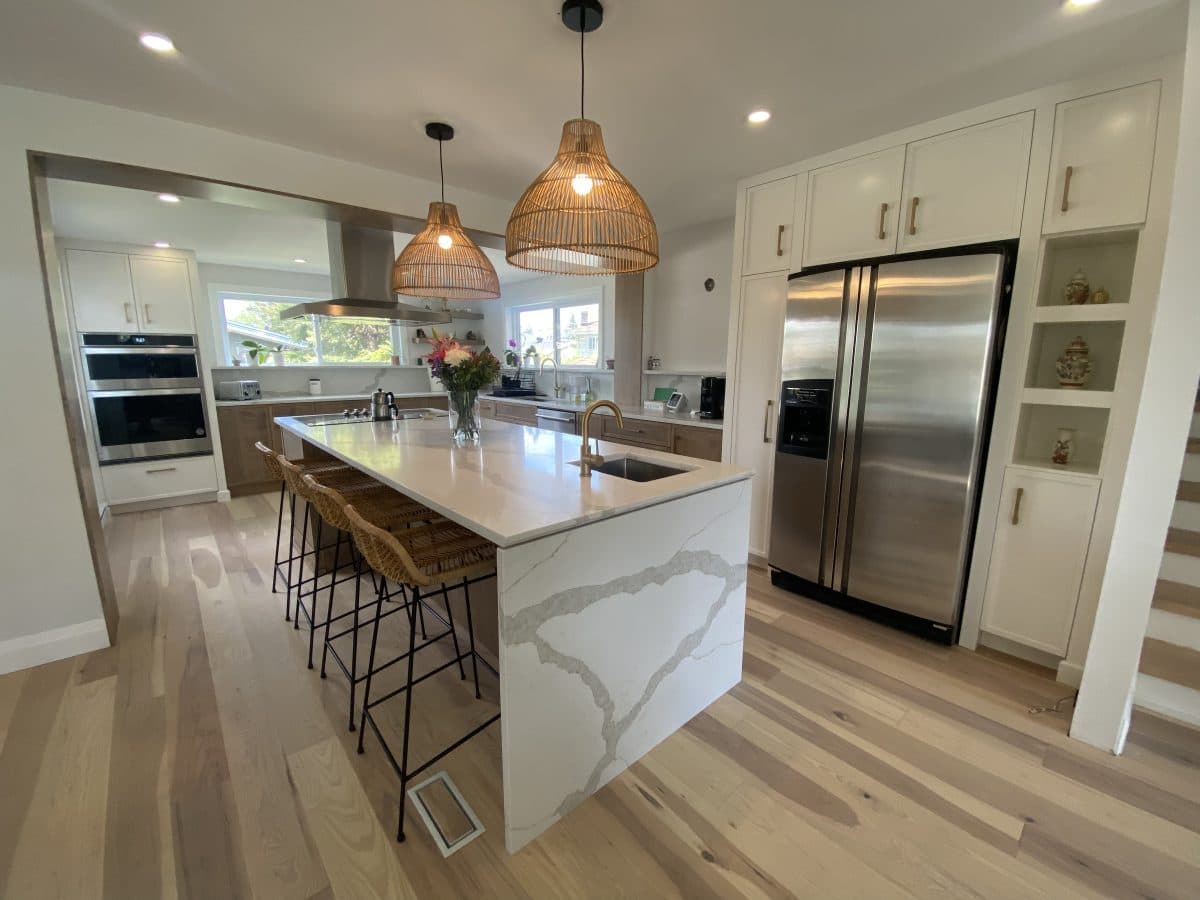
The interior layout, almost always. Modern kitchens, bathrooms, walk-in closets, even moving an interior load-bearing wall — heritage rules don't reach behind plaster. We've done full kitchen relocations, master suites carved out of three small bedrooms, and basement excavations for taller ceilings.
You can also change:
- Windows, as long as the profile and sightlines match the original. Wood-clad windows from local fabricators like Lepage Millwork pass review easily; vinyl windows almost never do.
- Roof membranes, flashings, and gutters — provided the visible profile from the street doesn't change.
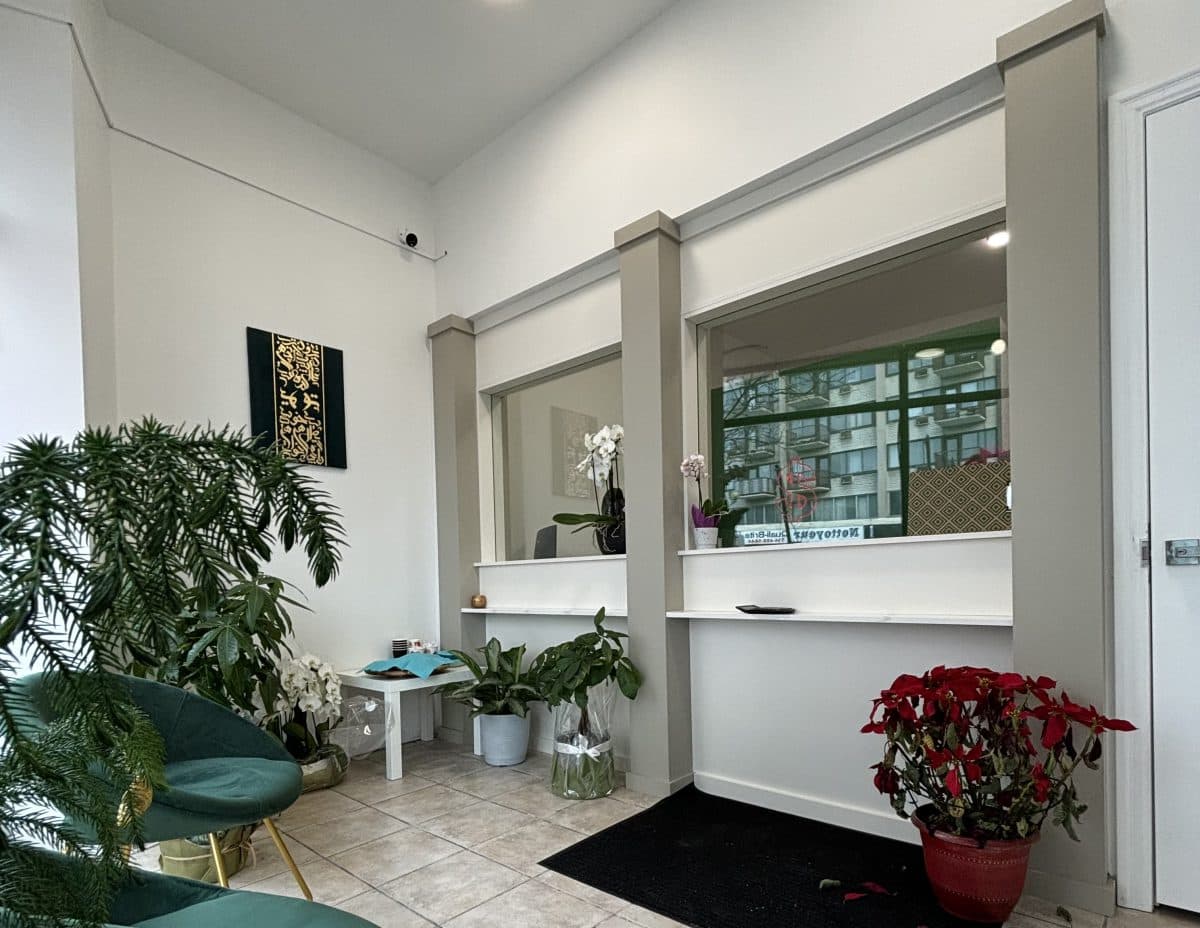
- The interior of the front entry vestibule.
- Mechanical systems entirely.
What you can't
The façade is sacred. So is the roofline silhouette, the cornice, the masonry colour, and the front door style. Specifically:
- No new openings on the street-facing façade. Bricking in or enlarging existing openings is almost always denied.
- No exterior insulation on heritage masonry. The brick has to breathe to the outside; foam wrapping it traps moisture and fails the wall in five winters.
- No modern materials visible from the street. Aluminum balcony rails, vinyl trim, composite decking visible from below — all flagged.
- No rooftop additions visible from the public realm. Some rear-yard additions are possible if the silhouette from Saint-Paul or de la Commune doesn't change.
The hidden expensive surprises
After 25 years of Old Montreal work, these are the budget items that catch homeowners every time.
Lime mortar repointing. Heritage brick uses lime mortar, not Portland cement. Re-pointing has to match. Cost: $40–$70 per linear foot of joint. A small façade can hide 300 linear feet of joints. Math it.
Cast-iron drain stack replacement. Many triplexes still have original cast-iron stacks. Once the pipe wall thickness drops below 60% (we measure with ultrasonic gauges), the whole stack has to come out. Budget $8,000–$18,000 depending on how many floors and how accessible.
Floor joist sistering. Original 2x8 joists at 24-inch spacing aren't code anymore for live load. Sistering them with new 2x10s at 16-inch spacing is roughly $3,500 per floor for a typical triplex footprint, and almost always required when you're opening the floors anyway.
Lead paint encapsulation. Anything painted before 1980 likely has lead. The encapsulation cost on an average triplex runs $4,000–$9,000 depending on surface area.

Realistic budgets and timelines
A modest triplex interior renovation — keeping the layouts, replacing kitchens and bathrooms, refinishing floors, mechanical updates — runs $180,000–$320,000 in 2026 with a 5–7 month total schedule.
A full top-to-bottom rebuild including basement excavation, full mechanical replacement, layout reconfiguration, and exterior restoration runs $450,000–$850,000 with a 9–14 month schedule. The exterior heritage permitting alone often takes 3–4 months.
Working with the heritage officer
Three things that make the conversation go faster:
- Bring drawings, not concepts. A heritage officer has seen every concept. They sign off on dimensioned drawings.
- Photograph everything before demolition. Original finishes you uncover during demo can sometimes be approved for preservation in the final design, which earns you goodwill on the rest of the file.
- Don't argue about the façade. You'll lose. Spend the energy on what you can change.
FAQ
Can I add a rooftop terrace on a heritage triplex?
Sometimes. It depends on whether the terrace is visible from the public realm and how the rail and access structure read from the street. Set-back terraces with clear glass rails behind the cornice line pass review more often than not.
How long does a heritage permit take in Ville-Marie?
Plan for 8–14 weeks for an interior renovation with no façade changes, and 4–7 months if exterior work is in scope. The heritage officer reviews drawings monthly in batches, not on demand.
Will my renovation lose its heritage character?
Not if it's designed right. We've finished Old Montreal triplexes that read 19th-century from the street and feel like a 2026 home inside. The two readings are not in conflict; they just need a designer who respects both.
Do you handle the heritage submissions in-house?
Yes. We prepare drawings, photograph the existing conditions, and meet with the Ville-Marie heritage officer on your behalf. Most of our Old Montreal projects never require the owner to attend a heritage meeting.
Planning a renovation like this?
Sadio Moghaddam
General contractor · RBQ 5791-0242-01
Sadio Moghaddam has led Revohouse since 2000 and personally signs every quote. First consultations are free and no-obligation.