Design-build vs. design-bid-build for a high-end renovation
For a high-end Montreal renovation, the contract structure you sign matters as much as the contractor you hire. Here is the honest comparison between design-build and design-bid-build — written by a firm that does both.
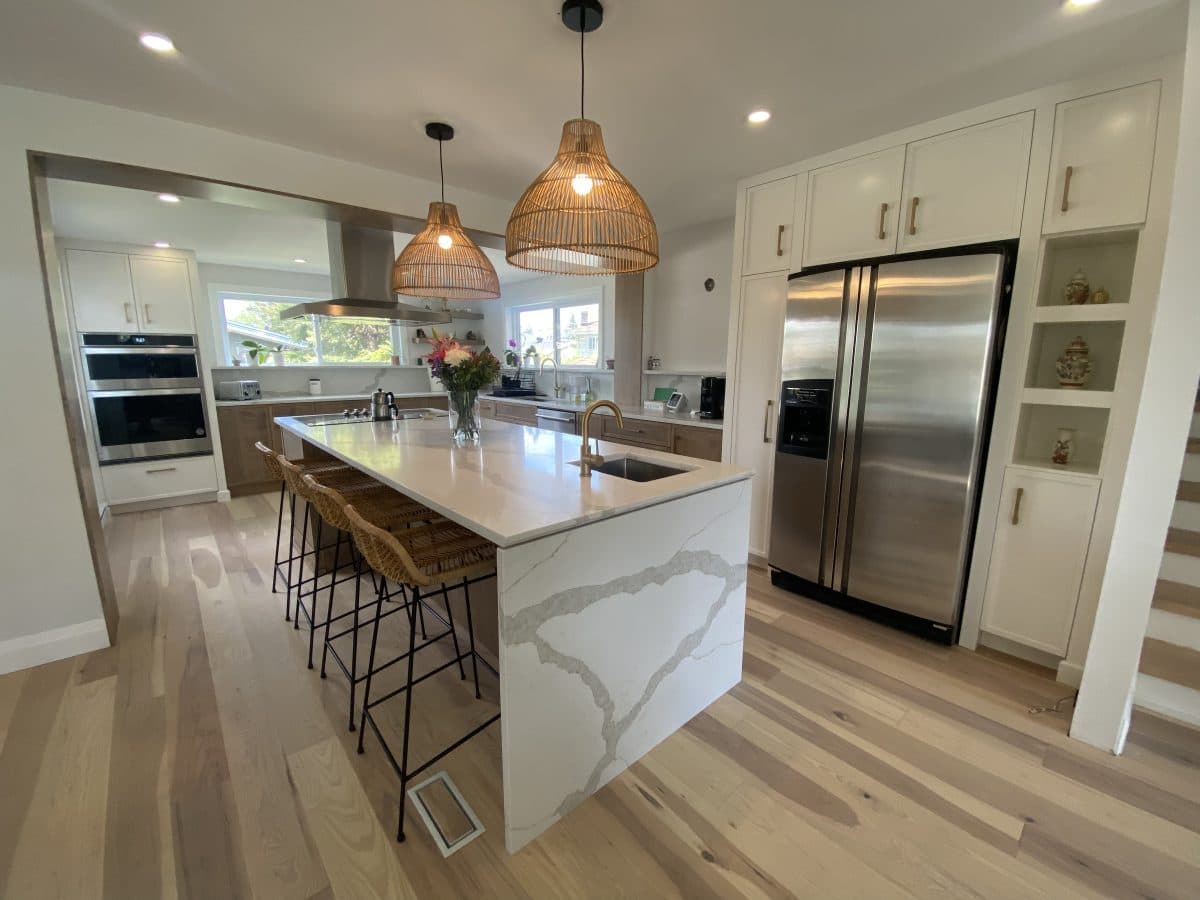
A Westmount client interviewed three architects and four contractors for a $1.3M whole-house renovation before calling us last September. He'd done his research. He had a thick binder of bids, all of which were inconsistent in scope, none of which he could compare directly, and one of which had quietly omitted the kitchen. He asked us a question we hear from every serious renovation client at some point: "Should I hire the architect first and bid the construction, or hire a single firm to do both?" The answer depends on what you're optimizing for — and most homeowners are optimizing for the wrong thing.
Here is the honest comparison.
What each model actually is
Design-bid-build is the traditional approach: hire an architect to design the project, then take the completed drawings to three or four general contractors for a bid, then award to one. Three contracts, three parties, three timelines.
Design-build is a single contract with a firm that does both design and construction in-house. The same team that draws the kitchen builds it. One contract, one timeline, one accountability.
There are also hybrid models — an architect-led design-build where the architect carries a relationship with a preferred GC, and contractor-led design-build (what Revohouse offers) where the contractor carries a relationship with retained architects.
Where design-bid-build still wins
Despite our bias as a design-build firm, design-bid-build is the right model in three specific situations:
- You already have a finished design you love from an architect with no construction arm. Walking away from that design to consolidate would cost more in design fees than you'd save in coordination.
- The project is genuinely public-bid-style, like an institutional renovation or a publicly funded heritage project where competitive bidding is required.
- You want maximum control of design and are willing to manage the contractor coordination yourself or hire an owner's rep to do it.
For a small fraction of homeowners — typically those who are themselves architects, real estate developers, or have done several renovations — design-bid-build delivers the design freedom they need.
Where design-build wins for a high-end renovation
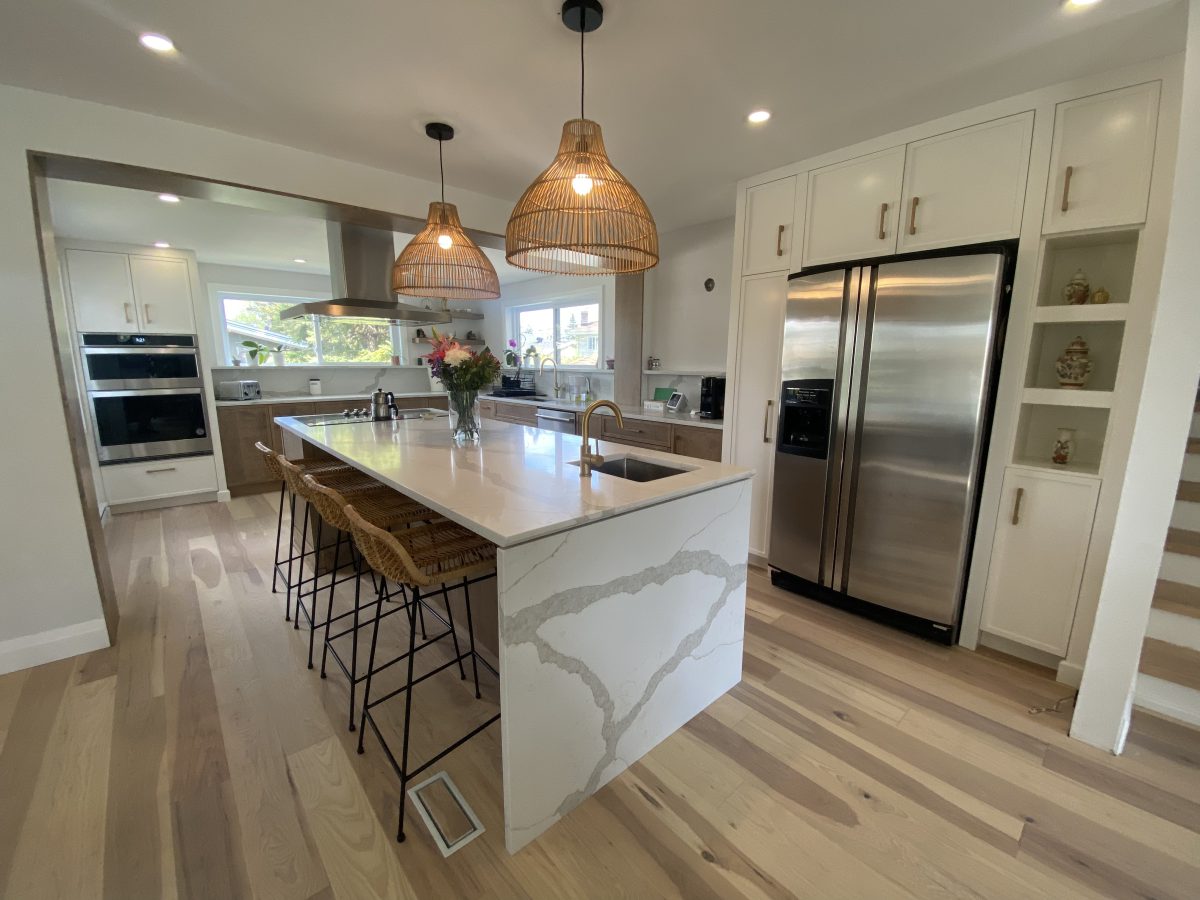
For most high-end private renovations in Montreal — the $400,000–$2,000,000 range — design-build is the better answer. Three reasons:
Reason 1: Cost predictability. A design-build firm prices the project as it's being designed. By the time drawings are issued for permit, the cost is already locked. In design-bid-build, the design is complete before any contractor sees it; surprises in the bids force value-engineering, redesign, and delay.
Reason 2: Accountability. When a finished kitchen has a problem two years later, design-build means one phone call. Design-bid-build means a finger-pointing call between the architect ("the contractor built it wrong") and the contractor ("the drawings were unclear"). Most owners don't have the time or expertise to adjudicate that.
Reason 3: Speed. Design-build typically saves 8–14 weeks on a high-end project because the design phase and the procurement phase overlap. We order the cabinetry while we're finalizing the bathroom drawings.
The numbers — what each model actually costs
For a $1M renovation, all-in, the cost difference between the two models is smaller than people expect.
| Cost category | Design-bid-build | Design-build | | --- | --- | --- | | Architectural design fees (8–12% of construction) | $80,000 – $120,000 | $40,000 – $80,000 (often bundled) | | Construction contract | $1,000,000 | $1,000,000 | | Owner's contingency (10%) | $108,000 | $104,000 | | Project management overhead | borne by owner | embedded | | Schedule overrun risk | higher | lower | | Total likely | $1,188,000 – $1,228,000 | $1,144,000 – $1,184,000 |
The savings are real but not enormous on paper. The bigger difference is in the experience: design-build clients spend fewer weekends in coordination meetings, fewer phone calls, and fewer change-order arguments.
The trap of cheapest-bidder design-bid-build
The most common failure mode of design-bid-build is awarding the project to the lowest of three bids. After 25 years of seeing this, the pattern is consistent: the low bid wins, the project starts, and within four months the budget has been reconciled upward through change orders to roughly where the second-lowest bid was. The owner ends up paying the same price for a project that's now adversarial.
Three protective practices if you do go to bid:
- Bid the same drawings to all contractors — line by line, with identical specifications
- Require unit pricing on a defined list of contingency items so change orders are pre-priced
- Reject the lowest bid if it's more than 10% below the next lowest — it's a signal of either scope omission or thin margin that will surface as change orders

What "design-build" looks like at Revohouse
For a typical Revohouse design-build project, the phases are:
- Discovery (free, 60 minutes on site) — walk the property, talk goals, ballpark budget
- Pre-design contract — $2,000–$5,000, credited back at construction signing — produces concept layouts and a preliminary budget
- Design contract — typically $20,000–$60,000 for a whole-house renovation — produces permit-ready drawings, finish selections, and a firm construction contract
- Construction contract — fixed price, with itemized scope and a pre-agreed change-order process
- Build phase — managed by a single Revohouse project manager from foundation through final walkthrough
- Post-occupancy — one-year warranty walkthrough and a longer structural/mechanical warranty period
Throughout, the design team and the construction team are in the same office. Coordination happens in hallways, not via email.
How to choose, in two questions
If you can answer yes to both, design-build is almost certainly the right model:
- "Do I value certainty of price and schedule more than maximum design freedom?"
- "Would I rather make decisions through one project manager than coordinate between an architect and a contractor?"
If either answer is no, design-bid-build with a strong owner's rep is the better path.
FAQ
Does Revohouse offer both models?
Yes. Most of our high-end residential work is design-build. We also tender against architect-issued drawings on selected projects, especially heritage restorations where the architect is already deeply involved.
How are design fees structured in design-build?
A pre-design retainer ($2,000–$5,000, credited back at construction signing), then a design fee tied to project complexity. For an "exclusive design" tier on projects over $150K, design is included at no charge.
What if I don't like the design Revohouse produces?
You walk away. The pre-design and design contracts are stand-alone — you own the drawings and can take them to any contractor. We've had this happen perhaps four times in 25 years.
Can the architect on a Revohouse design-build project be one I choose?
Yes. We work with several Montreal-area architects on a project-by-project basis. If you have a preferred OAQ-registered architect, we can structure the project around them.
Planning a renovation like this?
Sadio Moghaddam
General contractor · RBQ 5791-0242-01
Sadio Moghaddam has led Revohouse since 2000 and personally signs every quote. First consultations are free and no-obligation.