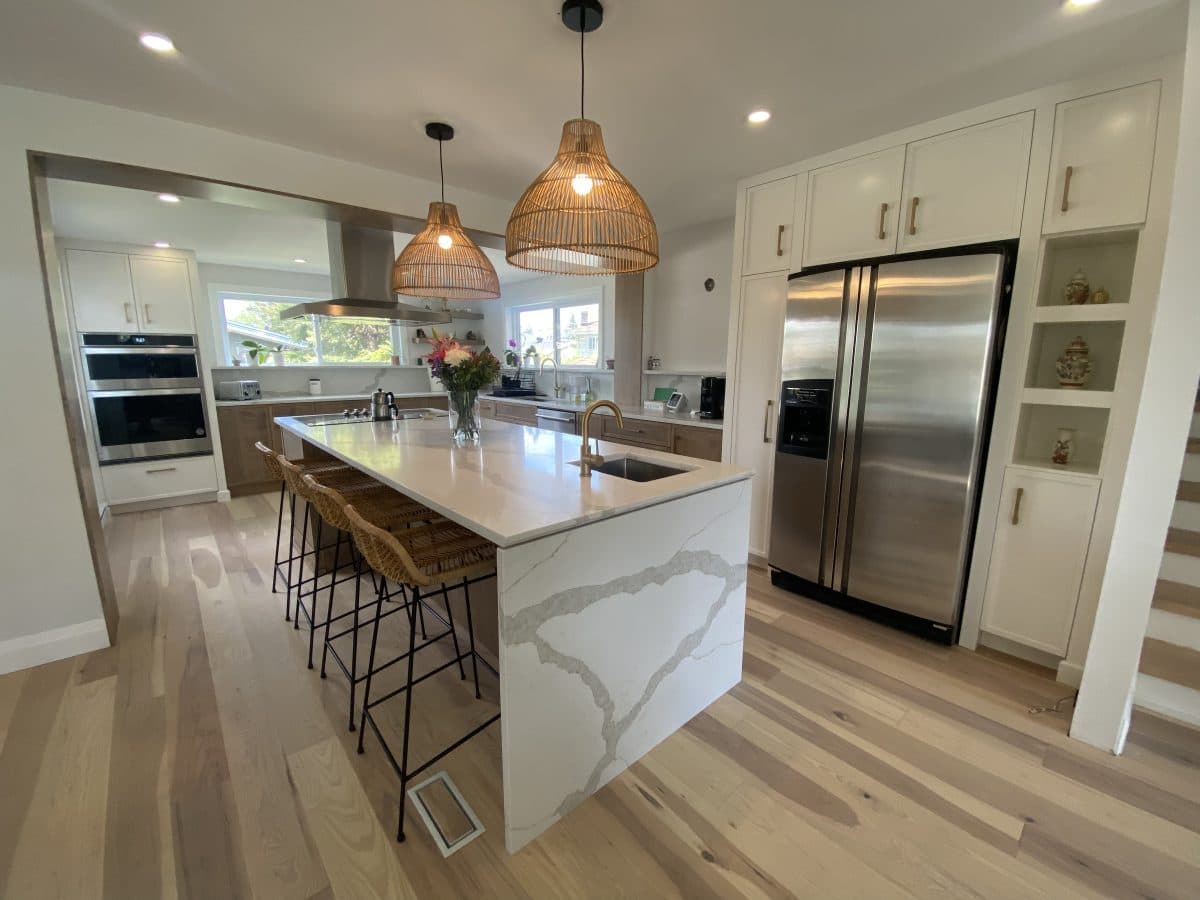
Custom kitchen design in the West Island — layout decisions that matter
A custom kitchen is not about the doors or the counter — it is about three or four layout decisions that determine whether the room actually works. Here is what we learn on every West Island kitchen design.
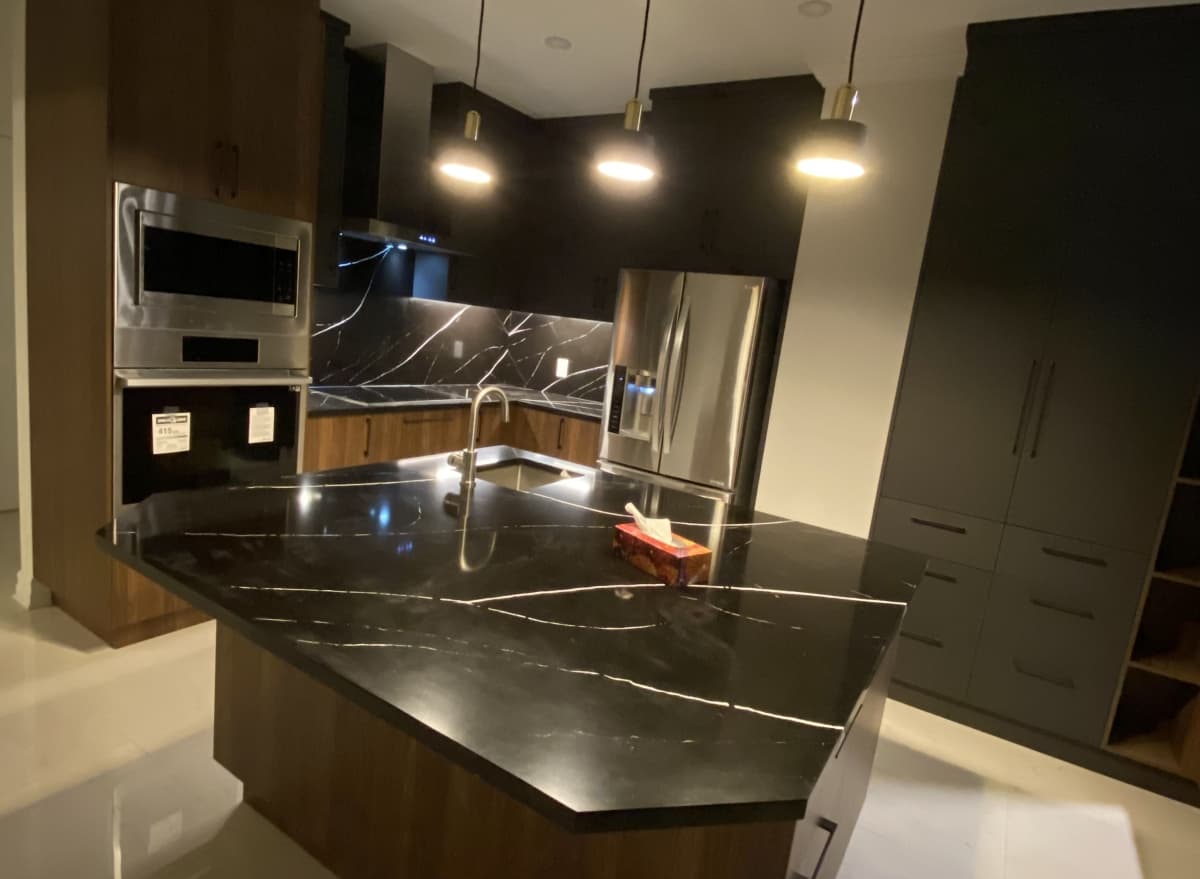
The Beaconsfield client we delivered a kitchen to last November sent us a text two weeks after move-in. "I keep finding new things I love about how it works." That text — not the photos, not the thank-you note — is what we want every kitchen client to send. It means we got the layout decisions right, and the doors and the counter and the lighting are simply finishing what the layout already promised. A custom kitchen is not really about cabinetry. It's about four or five layout questions that get answered on the first day of design and never really stop paying back.
Here is how we work through them on every West Island kitchen we design.
The layout questions that actually matter
1. Where does the cook actually stand?
Every kitchen has a "primary station" — the 4x4-foot rectangle where the cook spends 80% of their time. In most homes it's at the range. In a lot of homes — especially homes where prep is the main activity — it's at a counter between the sink and the fridge. Designing around the wrong station is the single most common kitchen mistake we see in West Island homes built before 2000.
The diagnostic: ask the client to mime cooking a Sunday roast. Where do they instinctively stand? Then design from there.
2. Where does the second cook stand?
In families that cook together — and we see this more in West Island households than most Canadian markets — there's a second standing position that has to coexist with the first. Two cooks at the same island. One at the range, one at the prep sink. One mixing, one washing. Without explicit design for the second station, two-cook households end up bumping into each other for years.
The right design has two separate working surfaces with their own task lighting, their own outlets, and ideally their own narrow trash pull-out.
3. Where does the cleanup happen?
The dishwasher placement is the most under-considered decision in 90% of West Island kitchens. The rule we apply: the dishwasher should be within one step of the primary sink, and the cabinet immediately above the dishwasher should be the everyday-dishes cabinet. Every other arrangement creates a daily fatigue penalty that compounds over the life of the kitchen.
4. Where do groceries land?
Watch a West Island family come home from Costco. Doors open, hands full, sometimes three or four trips. The landing zone for groceries — typically a 24-inch counter run between the back door or garage entry and the fridge — is where unboxing happens. Without it, perishables stack on the island and bags scatter across the floor. With it, the kitchen recovers from grocery day in eight minutes.
5. Where does life happen when nobody is cooking?
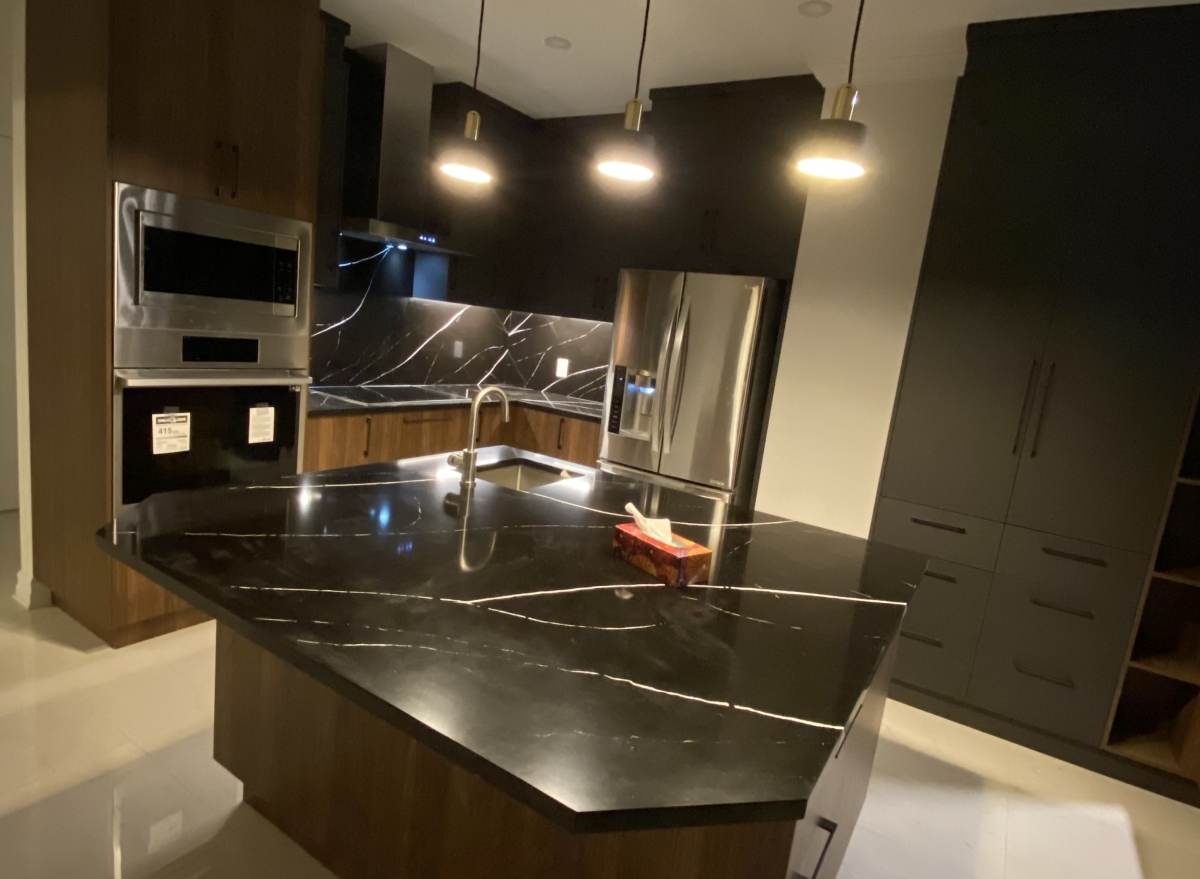
A kitchen is in cooking mode maybe 18 hours a week. The other 150 hours, it's a hangout space. Where does homework get done? Where does the laptop sit during a Saturday phone call? Where does coffee happen at 6:45 a.m.? Designing for those quieter hours is what separates a kitchen from a kitchen-shaped showroom.
The decisions that don't matter as much as people think
Three things West Island clients agonize over that almost never make or break a kitchen:
The shape of the door profile. Shaker, slab, mitred, beaded — once the room is finished, you'll forget which one you chose within two months. Pick a profile that suits the house and stop debating.
The grout colour. Lighter grout reads dirtier sooner. Darker grout reads heavier visually. Within those two trade-offs, most colour choices are aesthetic and don't affect daily life.
The exact cabinet hardware. Try three options at the showroom for 20 minutes, pick one, never look back. Hardware is not a $300,000 decision.
The West Island patterns we see
Five layout patterns that show up in nearly every West Island kitchen renovation we do:
-
The "remove the wall to the dining room" project. Almost every 1970s and 1980s West Island home has a wall between the original kitchen and the dining room. Removing it adds usable kitchen size and improves natural light, almost always at the cost of one structural beam.
-
The "extend toward the patio doors" project. Many West Island kitchens were designed before patio doors were a given. The extension toward the backyard is now standard, sometimes with a built-in banquette under the windows.
-
The "kill the peninsula, build an island" project. Peninsulas were popular in the 1990s and almost never work as well as a properly sized island.
-
The "second sink at the bar" project. Higher-end West Island kitchens routinely add a smaller second sink for bar/prep use, separate from the primary sink.
-
The "tall fridge, panelled door" project. A 36-inch integrated fridge in cabinetry-matched panels reads dramatically different from the same fridge in stainless steel — even though the fridge itself is identical.

Custom vs. semi-custom vs. stock
For a Revohouse custom kitchen design, we use three tiers depending on budget and project:
- Stock — IKEA, big-box. Right for rentals and basement secondary kitchens. $8,000–$22,000 for the cabinetry.
- Semi-custom — Cabico, Cuisines Steam, similar Quebec mid-market shops. Right for most West Island primary kitchens. $22,000–$45,000 for cabinetry.
- Custom — a Montreal millwork shop building from drawings. Right for high-end primary kitchens and any non-standard dimension. $40,000–$95,000 for cabinetry.
The break point is usually at $30,000 of cabinetry cost. Below that, semi-custom beats custom on value. Above that, custom starts winning because the design freedom genuinely shows up in daily use.
How long custom kitchen design takes
For a typical Revohouse West Island kitchen, the design phase runs:
- Week 1: initial site visit, scope, ballpark budget, signed pre-design contract
- Weeks 2–4: measured drawings, concept layouts, 3D rendering, first-round revisions
- Weeks 5–7: finish selections — cabinetry, counter, hardware, lighting, flooring
- Weeks 8–10: final drawings, line-item construction contract, permit submission
So about 10 weeks from first site visit to a signed construction contract. That timeline assumes a responsive client. The longest design phases in our history have been homeowners who couldn't decide on a backsplash for three months.
FAQ
Does Revohouse provide 3D renderings during design?
Yes. Every Revohouse design contract includes 3D renderings of the proposed layout, lit and finished, so you can see the finished kitchen before construction starts.
Can the cabinet shop be one we choose?
Sometimes. We have three Montreal-area millwork shops we work with regularly and can extend to a fourth if you have a strong relationship with a specific cabinetmaker. Our internal QA process requires that we know the shop's work.
How much should design fees be for a custom kitchen?
For Revohouse, design fees run roughly 2–5% of the project budget, and a portion is credited back against the construction contract. For projects over $150K, design is bundled at no extra charge.
What's the most overlooked design decision?
Outlets. The right outlet plan turns a kitchen from a place where appliances live to a place where work actually happens. We plan every outlet on the rendering, before construction.
Planning a renovation like this?
Sadio Moghaddam
General contractor · RBQ 5791-0242-01
Sadio Moghaddam has led Revohouse since 2000 and personally signs every quote. First consultations are free and no-obligation.