What 25 years of renovating Montreal has taught us
After 25 years and several hundred projects across Montreal, the West Island, and Toronto, here are the lessons that show up on every job we do — and the ones we learned the hard way.
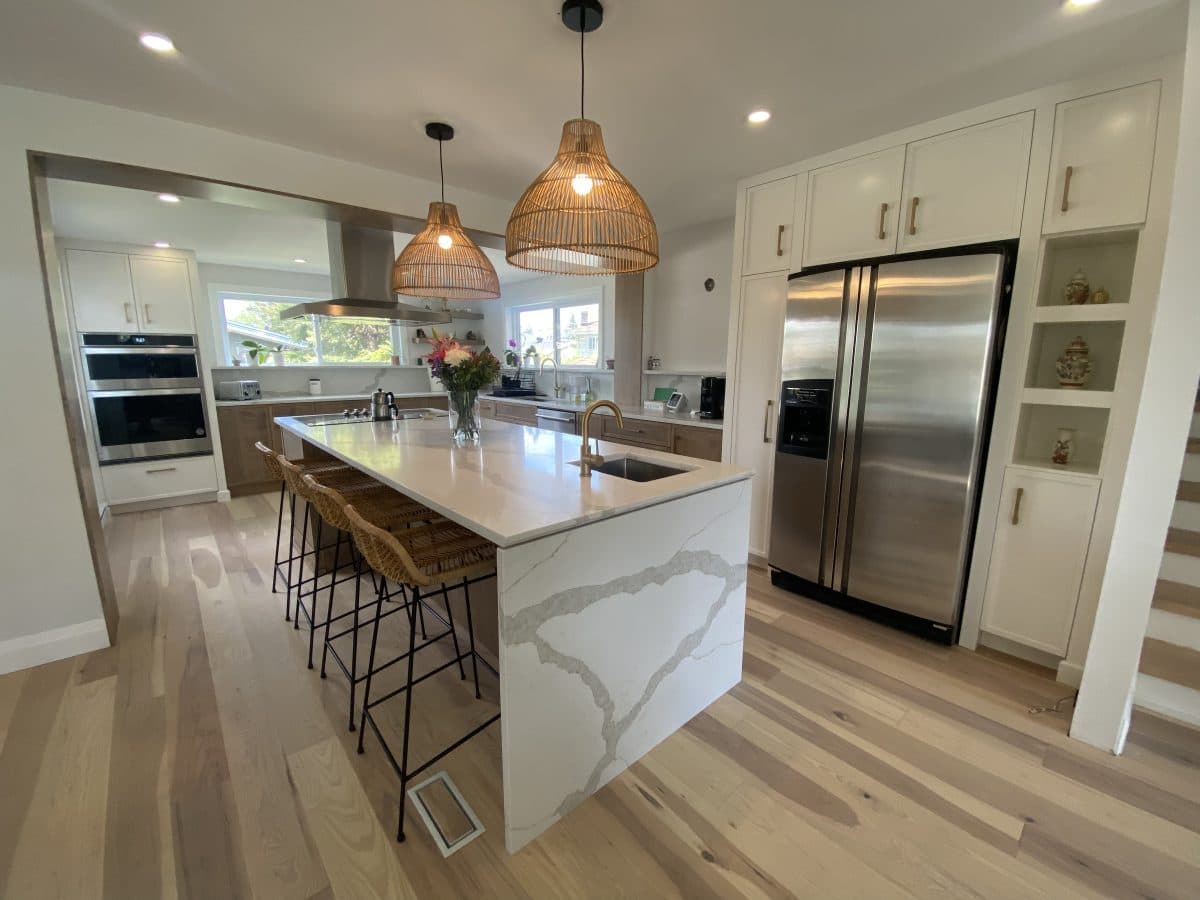
The first kitchen I ever installed, in 2000 in a duplex on Saint-Laurent boulevard, has been re-renovated twice since then by other contractors. I drove past it last month on my way to a site meeting. The street has changed beyond recognition — restaurants come and go, a new condo tower behind it, gentrification mostly complete — but the bones of the building are still the same brick and original framing. That's the strange thing about doing this work for 25 years in one city. The buildings outlast every fashion. The contractors come and go. The honest ones build careers; the rest disappear after a few bad projects.
Here is what I'd tell a first-time renovation client, condensed from 25 years of Revohouse work across Montreal, the West Island, and Toronto.
The cheapest renovation is the one you don't have to redo
About a third of the calls we get every year are from homeowners whose previous renovation, by someone else, has already failed. Failed basement waterproofing, failed kitchen plumbing, failed bathroom tile, failed mechanical sequencing. Almost every one of those failures was avoidable at the original build. The cost of doing it right is always less than the cost of doing it twice — usually by a factor of three or four.
This is why we walk away from projects where the homeowner is shopping on price alone. It's not snobbery. It's that we know what the second-cheapest contractor's work looks like at year four, and we don't want our name on a job that ends that way.
The hidden cost in old Montreal buildings is always the mechanical
Before 2010 it was usually electrical. Now it's almost always plumbing and HVAC. Old Montreal buildings — the triplexes, the post-war bungalows in NDG, the 1960s split-levels in Pointe-Claire — were built with mechanical systems sized for the loads of their time. A 2026 renovation that adds a heat pump, a tankless water heater, a high-flow rainshower, and a wine fridge is asking the mechanical to do twice the work it was designed for.
The pattern that surprises new clients: a $90,000 kitchen renovation in a 1970s house will routinely uncover $25,000 of mechanical work that has to happen to support the new kitchen. We've learned to walk the basement before quoting the kitchen. So should every contractor.
Trades don't change. The good ones are still the good ones.
The Montreal trade scene has fewer crews than people think. After 25 years we've worked with most of them. The good electricians are still the good electricians. The good plumbers are still the good plumbers. We don't shop the cheapest sub for any individual job; we have a long-standing roster and we pay them on time. That's the single biggest reason our schedules hold — our trades show up because they trust they'll get paid.
If a contractor can't tell you the names of the electrician and the plumber who will be on your job, that's because the work is being shopped weekly. Walk away.
The clients we remember are not the most expensive ones
The Westmount whole-house we did in 2018 was the most expensive project of that year. The Pointe-Claire bathroom we did six months later was a quarter of the cost. Both clients sent the same Christmas card the following year. Both still call when they need work done. Project size doesn't predict client relationship — communication does.
The single biggest predictor of a client who refers their friends is whether we returned their phone calls within four hours during the build. Not the quality of the millwork. Not the finish of the tile. The phone calls.
The mistakes that taught us the most
Three real Revohouse mistakes, in order of how much they taught us.
2008 — a basement we finished in West Island without checking the original drain tile. Two years later the homeowner called about water staining. We tore out our own work, redid the drain tile, and replaced everything we'd built — at our cost. That project taught us to never finish a basement without verifying the perimeter drainage in person. Every basement we've finished since has been preceded by that check.
2014 — a kitchen we built in Old Montreal where we didn't think the cast-iron drain stack would fail mid-project. It did, in the middle of the install, flooding the unit below. Our insurance covered the damage; the lesson was bigger than the dollars. Now we ultrasonic-test cast-iron stacks on any Old Montreal project before scheduling work.
2019 — a Westmount whole-house where we agreed to a tighter schedule than we'd normally accept. We delivered it on time. The trades hated it. Two of our best sub-trades stopped taking our work for a season. Now we don't sign schedules we can't deliver without burning the people who do the work.

The advice we give every first-time renovation client
In no particular order:
- Budget for 15% contingency, separately, in writing. Not as part of the construction contract — as your private safety margin. If you don't need it, take the trip. If you do need it, you'll be glad you set it aside.
- Visit the site weekly during construction. Not to micromanage. To stay current.
- Ask for the schedule in calendar form, not in week numbers. "Week 7" doesn't mean anything to a non-builder. "August 14" does.
- Don't change finishes during construction. Change orders cost 3–4× what the same decision would have cost during design.
- Take photos of every wall before drywall closes it. Five years from now, you'll want to know where the studs are.
What hasn't changed in 25 years
Three things, across the entire history of Revohouse, are exactly the same now as they were in 2000.
- Clients want a contractor they can trust more than they want a fashion-forward kitchen.
- A handshake follows a written contract — not the other way around.
- The best marketing we've ever done is finishing a project on time, on budget, and on quality. Word of mouth is still 70% of our work.
The work we want to be doing in 2050
If we're still doing this in 25 years — and I plan to be — I want it to look like it does now. Same RBQ. Same business address in DDO. Same direct phone number that I answer myself. Same project managers walking the same jobs. Renovation is a slow-relationship business. Anyone selling you a fast version is selling you something else.
FAQ
How many active projects does Revohouse run at a time?
Six to eight, typically. We deliberately don't grow beyond what one senior project manager can personally inspect on a weekly cadence. The economics of scaling beyond that work against quality.
What's the largest project Revohouse has done?
A $2.4M whole-house renovation in Westmount, finished in 2022 over a 14-month schedule. We've also delivered several commercial fit-outs in the $1.5M–$2M range.
Do you take on small projects?
Yes, with one exception: we don't do single-trade work (only painting, only flooring, only one bathroom under $15K). Below that threshold the project management overhead doesn't earn its keep. Above it, we'll talk to anyone.
Who do I talk to on a Revohouse project?
A single named project manager from your first site visit through final walkthrough. For larger projects, Sadio (the principal) is also present at every major milestone. You don't get rotated through phone systems.
Planning a renovation like this?
Sadio Moghaddam
General contractor · RBQ 5791-0242-01
Sadio Moghaddam has led Revohouse since 2000 and personally signs every quote. First consultations are free and no-obligation.